Anatomy for Personal Trainers: What Every PT Should Know in 2026
Spoiler: it’s not every muscle name. Here’s the anatomy that actually matters on the gym floor in 2026
Spoiler: it’s not every muscle name. Here’s the anatomy that actually matters on the gym floor in 2026
Understanding anatomy is a fundamental part of becoming a competent and confident Personal Trainer. Not only does it support the design of more effective workout programmes, but it also helps you identify movement limitations, improve client performance, and reduce the risk of injuries. Whether you’re starting out or levelling up, this guide explores the key anatomical knowledge that every PT needs to grasp in 2026 and heading into 2027 and how to apply it practically in your client sessions.
When personal trainers study anatomy, they gain far more than theoretical insight. They learn to identify and explain the body’s structural organisation, understand how various systems interact, and most importantly, apply this understanding in practical, real-world settings. However, the learning curve can feel steep at first. It’s one thing to memorise diagrams of skeletons and textbook muscle maps, but another thing entirely to interpret how this knowledge applies to a diverse range of clients, each with unique anatomical variations.
And in 2026, those clients are changing. The UK Chief Medical Officers advise all adults to do muscle-strengthening activity at least two days a week, partly to slow the decline in muscle mass and bone density that begins from around age 50. Meanwhile, an estimated 1.6 million adults in England, Wales and Scotland used weight-loss medication in a single year, and a further 3.3 million said they’d be interested. Both groups need strength training that protects muscle and joints, and that starts with knowing your anatomy.
This is where the concept of layered learning becomes so important. At Level 2, anatomy education typically focuses on broader muscle groups, such as the quadriceps and hamstrings. As trainers progress to Level 3, they dive deeper into the specific muscles within these groups, such as the vastus medialis, rectus femoris, and biceps femoris.
| Stage | Anatomy focus | What it lets you do |
|---|---|---|
| Level 2 Gym Instructor | Major muscle groups, main bones and joints | Instruct gym-based exercise safely |
| Level 3 Personal Trainer | Individual muscles, joint actions, planes of motion | Design individualised programmes |
| Diploma in Biomechanics Coaching | How joints and muscles work together as a system | Identify the root causes of movement limitations |
With continued study and hands-on experience, trainers may learn of even more variations in anatomy, like the occasional presence of a fifth quadricep muscle, like the tensor vastus intermedius, highlighting that anatomy is rarely as fixed or straightforward as it may first appear.
These discoveries can cause some trainers to doubt their understanding. They might worry they don’t know enough or fear they’ll harm their clients due to gaps in their knowledge. But this is precisely where deeper learning and coaching support become crucial. Programmes like a Diploma in Biomechanics Coaching help restore confidence by shifting the focus from trying to name every muscle to understanding the actual movements clients perform, and how to support those movements effectively.
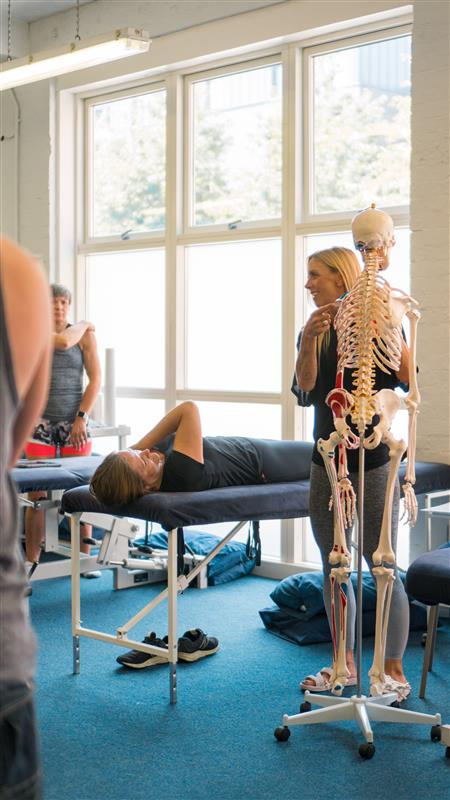
Rather than fixating on identifying individual muscles during complex movement, it’s often more beneficial to analyse joint actions and overall movement quality. In fact, even if we knew the exact muscle responsible for a specific movement anomaly, it wouldn’t necessarily change our intervention. What matters more is whether the movement is efficient, safe, and aligned with the client’s goals.
By observing how joints move, how muscles coordinate, and where compensations arise, personal trainers can make more meaningful and practical decisions during training sessions. This movement-based approach not only leads to better outcomes but also encourages a more intuitive understanding of anatomy, one that grows through observation, movement improvement, and reflection rather than rote memorisation.
Turn your Level 3 anatomy into a system for reading movement and fixing what’s really holding clients back.
| Muscle group | Main joint actions | Key exercises |
|---|---|---|
| Pectorals | Shoulder flexion, adduction, internal rotation | Bench press, push-up |
| Deltoids | Shoulder abduction, flexion, extension | Overhead press, lateral raise |
| Latissimus dorsi | Shoulder extension, adduction, internal rotation | Row, pull-up, lat pulldown |
| Trapezius and rhomboids | Scapular stability and retraction | Rows, face pulls |
| Biceps / triceps | Elbow flexion / elbow extension | Curls / dips, press-downs |
| Rectus abdominis | Trunk flexion; resists extension | Dead bug, plank |
| Obliques | Rotation, lateral flexion; resist rotation | Pallof press, side plank |
| Transverse abdominis | Stabilises the spine and pelvis | Bracing in all lifts |
| Quadriceps | Knee extension | Squat, lunge |
| Hamstrings | Knee flexion, hip extension | Deadlift, Romanian deadlift |
| Gluteus maximus | Hip extension | Hip thrust, squat |
| Gluteus medius and minimus | Hip abduction, pelvic stability | Single-leg work |
| Gastrocnemius and soleus | Ankle plantar flexion | Calf raises, running, jumping |
To effectively coach movement and design smart training programmes, personal trainers must be fluent in how different muscles function. In the upper body, the pectorals are primarily responsible for pushing movements, such as those in a bench press or push-up, involving shoulder flexion, adduction, and internal rotation. The deltoids are involved in most arm movements, particularly overhead presses and lateral raises, contributing to abduction, flexion, and extension.
Pulling movements such as rows and pull-ups rely heavily on the latissimus dorsi, which assists in shoulder adduction and internal rotation. Meanwhile, the trapezius and rhomboids stabilise the upper back and scapula, offering good form and upper body positioning. The biceps and triceps, of course, are essential for elbow flexion and extension, playing key roles in both pushing and pulling actions.
In the core, the rectus abdominis supports trunk flexion and, more importantly, stabilisation through co-contraction with the thoracolumbar fascia. The obliques manage rotation and lateral flexion, but they also help resist undesired movement, making them vital in maintaining core control. At the deepest level, the transverse abdominis wraps around the waist like a corset, helping to stabilise the spine and pelvis during movement.
The lower body contains some of the most powerful and functional muscle groups. The quadriceps drive knee extension in exercises such as squats and lunges, while the hamstrings manage both knee flexion and hip extension, contributing significantly to movements like deadlifts and sprinting. Interestingly, the adductor magnus often acts like a “fourth hamstring” due to its role in similar movement patterns. The gluteus maximus is one of the most important muscles for hip extension and explosive force, supported by the gluteus medius and minimus, which manage abduction and hip stability. And if a client tells you they have “weak glutes”, the truth is usually more interesting. Our Weak Glutes webinar explains why. Finally, the calves, particularly the gastrocnemius and soleus, are responsible for plantar flexion, enabling propulsion during walking, running, and jumping.
An effective training programme goes far beyond simply targeting specific muscles. Personal trainers must evaluate movement quality using objective benchmarks, identifying imbalances, limitations, and compensatory movements that may affect performance or increase injury risk.
This might involve using movement screens or assessment tools that highlight where a client may lack movement quality, stability, or strength.
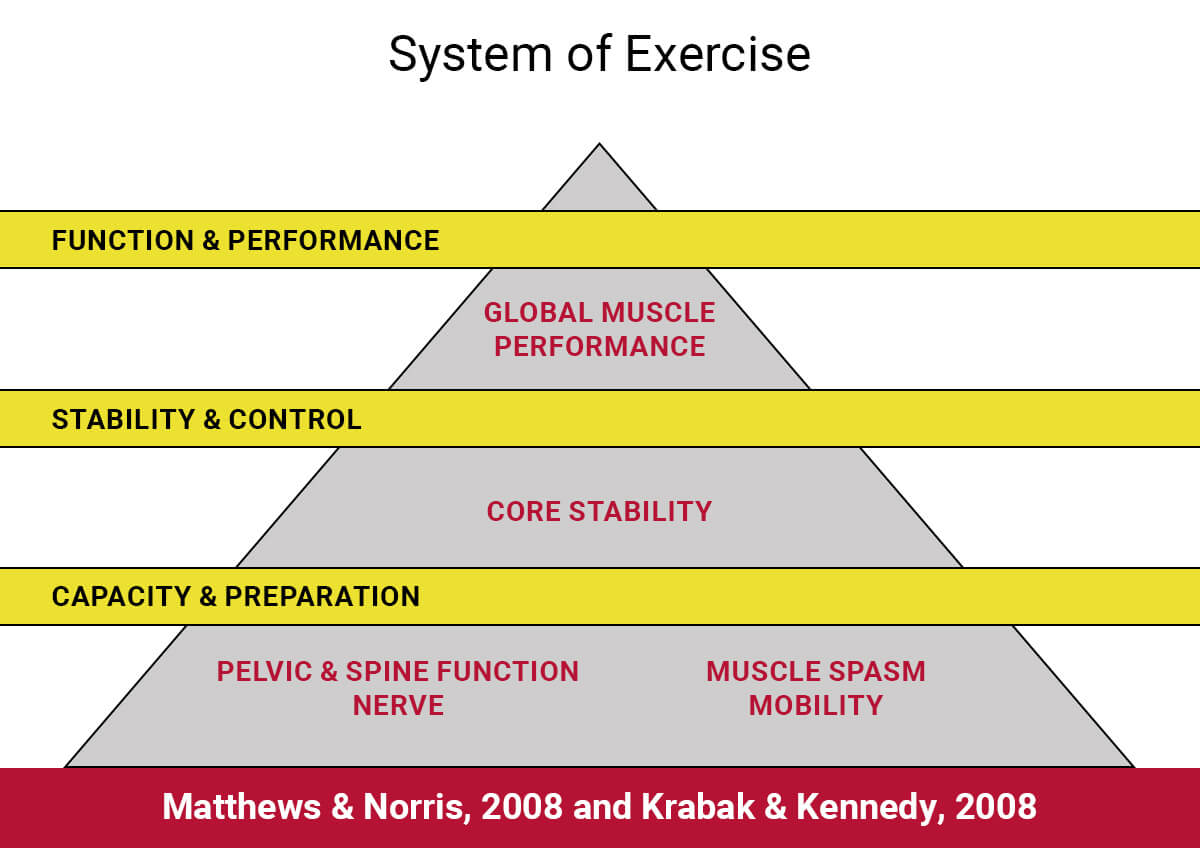
Preparation is key. Before progressing to complex movements, trainers can use isolated exercises and techniques such as muscle energy techniques (METs), joint mobilisation, and nerve mobilisation to improve movement quality. These preparatory steps lay the foundation for more integrated, functional training later on.
Equally important is antagonist conditioning, training opposing muscle groups to ensure joint stability and balanced strength development. For example, strengthening the hamstrings and glutes alongside the quadriceps helps maintain knee health. As clients progress, trainers should shift towards integrated, multi-joint, and multi-plane movements that reflect real-life demands and support the specific goals of the individual.
This pyramid approach to programming, starting with assessment and isolation, progressing through preparation and integration, ensures a comprehensive, client-centred path to performance and resilience.
Anatomy isn’t just a topic to tick off during your qualifications, it’s the foundation of everything you do as a Personal Trainer. From designing effective programmes and reducing risk of injury to understanding the subtleties of human movement, anatomical knowledge enables you to coach with precision and purpose.
As your experience grows, so too will your understanding. Don’t be discouraged by the complexity or the occasional uncertainty. Embrace it as part of the layered learning process. Focus on movement, stay curious, and keep expanding your skills through education and practice.
Here’s the exciting part. Everything shaping UK fitness right now points the same way: more people being told to build strength, more clients training alongside weight-loss medication, and more people wanting to stay strong and independent as they age. All of that needs trainers who can read movement, not just count reps. The PTs who build that skill now will be the ones clients seek out in 2027.
If you’re looking to enhance your understanding further, consider pursuing advanced courses in biomechanics, anatomy, and risk reduction. The more you know, the more confidently you’ll be able to help your clients move, perform, and live better.
You don’t need perfect anatomy to start, just a Level 3 qualification and some curiosity. The Biomechanics Coaching Diploma Course | Biomechanics Education fits around your clients, with no rigid deadlines and 0% finance available.

Master movement assessment with online learning and hands-on workshops, and become the coach clients seek out.
No. The Diploma in Biomechanics Coaching is designed for qualified fitness professionals, so a Level 3 qualification in Personal Training, Pilates or Sports Massage is all you need to start. It builds on the anatomy you already know and turns it into a practical system for assessing movement.
The Diploma teaches you how to assess movement, identify the root causes of client limitations, and programme with more confidence. You’ll cover intrinsic biomechanics, the pelvis and spine, the shoulder, knee and foot, and back health.
By specialising. More UK adults are being encouraged to strength train, and more clients are training alongside weight-loss medication or managing ageing joints. Trainers who can assess and improve movement, not just programme sets and reps, can offer a higher-value service. A biomechanics qualification gives you the system to do that.