AI and the Coaching Industry: How Coaches Stay Irreplaceable with Movement Skills in 2026
AI is reshaping the coaching industry, but biomechanics, movement observation, and embodied expertise remain impossible to automate.
AI is reshaping the coaching industry, but biomechanics, movement observation, and embodied expertise remain impossible to automate.
There is a lot of noise right now about AI replacing coaches. It’s dominating LinkedIn threads, coaching forums, and industry conferences. And while the conversation is understandable, much of it is missing the bigger picture!
AI is genuinely transforming the coaching industry, but the coaches who are paying close attention aren’t feeling threatened, rather they’re gaining a competitive edge. Because the very tools that are automating the generic, scalable parts of coaching are simultaneously making human expertise more valuable than ever.
The question isn’t whether AI will change your practice. It already has. The more important question is: are you positioning yourself on the right side of that shift?
In this piece, we’ll break down exactly what’s happening, what it means for your business, and most importantly, where your irreplaceable value lives.
The health and wellness coaching market is expected to exceed $35.5 billion by 2030. That growth is being accelerated by AI – here’s where the technology is making its biggest moves:
The most immediate impact of AI on coaching practices is the administration; scheduling, follow-up emails, onboarding questionnaires, progress tracking reminders, invoicing. AI tools are now handling these workflows automatically, which means coaches who previously spent 30-40% of their time on admin are reclaiming that time for actual coaching.
AI tools are getting genuinely impressive at collating client data, including sleep scores, activity levels, mood tracking and nutrition logs, whilst spotting patterns that would take a human much longer to identify. Platforms can now generate personalised programme adaptations based on real-time biometric data, and clients increasingly expect this level of responsiveness.
For coaches, this changes the game in one important way: you no longer need to be the collector of data – you need to be the interpreter of it.
AI-driven software can deliver mindset frameworks, habit stacking advice and motivational content at scale. If you’ve been selling access to information, even well-structured or useful information, AI can now do a version of that cheaper and faster.
This is the uncomfortable truth: if your primary value proposition is knowledge transfer, that’s the part most at risk.
The interesting part is this – for all of AI’s capability, there are two areas where it consistently falls short and where smart coaches are doubling down.
Movement observation and biomechanical assessment
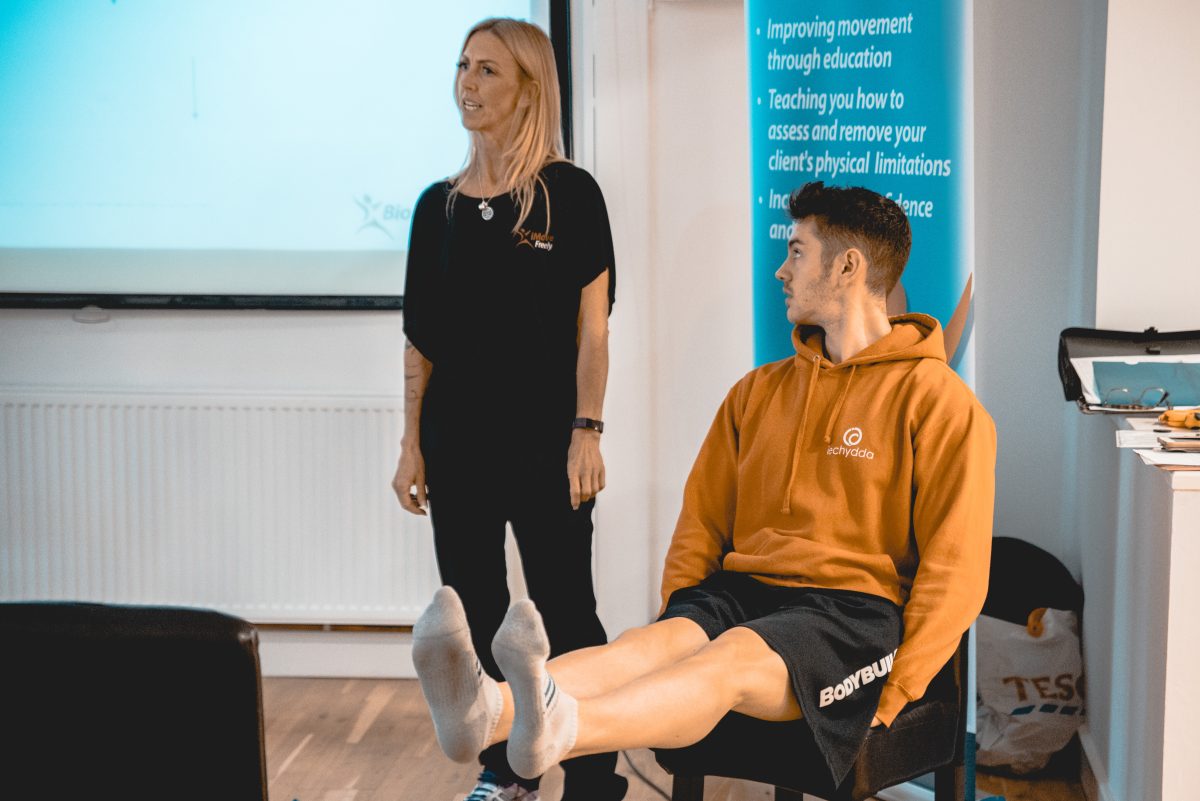
No AI tool on the market in 2026 can replicate what a skilled coach does in a live session: reading the subtle compensations in a client’s movement, noticing the asymmetry in their gait, feeling the restriction in a joint that doesn’t show up on any questionnaire.
Movement assessment is embodied expertise. It requires a trained human eye, an understanding of how emotion and stress manifest physically, and the ability to connect what you observe in someone’s body with the context of their life. A camera and a pose estimation algorithm can give you angles and coordinates. It cannot give you the full picture.
This is why movement-skilled coaches are becoming increasingly sought after, as they offer something that is genuinely un-automatable.
There’s a fundamental distinction that AI is forcing coaches to confront: the difference between informational coaching and transformational coaching.
Informational coaching: delivering protocols, sharing frameworks, providing accountability structures, can be largely replicated by well-designed AI.
Transformational coaching: the kind that shifts someone’s relationship with their body, their sense of identity, their capacity to tolerate discomfort and grow – AI cannot replicate.
| Aspect | Informational Coaching | Transformational Coaching |
| Core focus | Delivering knowledge, frameworks and protocols | Creating lasting change in behaviour, embodiment and identity |
| Role of the coach | Information provider and accountability manager | Skilled observer, guide, and facilitator of change |
| Use of AI | Easily replicated or enhanced by AI tools | AI can support, but cannot replace the core work |
| Client experience | Consuming advice and following instructions | Developing awareness, self-trust and adaptability |
| Movement assessment | Algorithmic feedback or generic cues | Real-time biomechanical observation and interpretation |
| Long-term outcomes | Short-term compliance and progress | Deep, sustainable transformation and resilience |
The coaches who are thriving are the ones who have moved decisively toward the transformational end of the spectrum and who have the skills to back that positioning up.

Coaches who invest in biomechanical education are building expertise that compounds in a way AI simply cannot replicate. Every client deepens your pattern recognition, every session sharpens what you see. That hands-on, embodied knowledge is your long-term competitive advantage.
The most effective coaches in 2026 are integrating AI strategically: letting automation handle admin, data synthesis, and content repurposing, while staying fully human where it matters; real-time movement observation, knowing when to challenge and when to hold space, creating the conditions for genuine change. None of that gets outsourced.
AI is raising the bar across the industry. For coaches with real embodied expertise, it’s also raising the ceiling, handling the scaffolding so you can focus entirely on the craft. The coaches who understand this aren’t worried about being replaced. They’re building practices that a subscription app simply cannot replicate.
Ready to build your movement coaching expertise in 2026?
We’ve put together The March Mastery Guide to Movement – a practical resource covering the skills, frameworks, and strategies that are setting the most successful coaches apart right now.